

Undergraduate
BA (Hons) Business Entrepreneurship – Dual Degree
Awarded by: Manchester Metropolitan University

School & Faculty
Summary
As Vietnam continues to grow as a global tourism destination, questions around authenticity, cultural representation and visitor experience are becoming increasingly important. The rapid development of tourism offers opportunities to promote local heritage and culture, while also raising the challenge of balancing cultural preservation with the expectations of modern travellers.

Stay up to date
Our website uses cookies to enhance your user experience and improve the effectiveness of our marketing activities. By clicking “Accept” or closing this window to continue browsing, you consent to our use of all cookies. If you do not agree to all cookies, please select “Manage cookies”. Learn more about our Privacy Policy and Cookie Policy for full details.
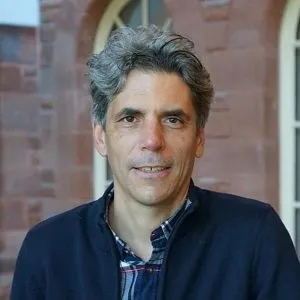
During a recent guest lecture at British University Vietnam (BUV), Dr Guillaume Tiberghien, Senior Lecturer in Tourism and Programme Director for the MSc in Management and Sustainable Tourism at the University of Glasgow, shared insights with students on the Tourism Management programme on how destinations can balance cultural preservation with the realities of contemporary tourism.
Drawing on case studies from Kazakhstan, New Zealand and Scotland, the lecture gave BUV students practical perspectives on how tourism experiences can be designed in ways that are culturally sensitive and commercially viable.
According to Dr Tiberghien, tourism development can place pressure on local communities to adjust the way they present their culture to meet visitor expectations. Cultural practices rooted in everyday life may be simplified, staged or turned into performances. While this can make experiences more accessible, it may also disconnect culture from its original context and meaning.
Dr Tiberghien highlighted that authenticity should not be understood only as preserving traditions in a fixed form. Instead, it can emerge through meaningful interaction between visitors and local communities. From this perspective, the value of a tourism experience is created not only by observing heritage, but also through participation, engagement and understanding.
This is particularly relevant to Vietnam, where many destinations are drawing on local cultural values to develop tourism. Food, crafts, festivals, rituals, farming practices and everyday activities are not only foundations for tourism experiences, but also part of the living fabric of local communities.
Dr Tiberghien emphasised the importance of viewing these elements as living heritage. When visitors are able to engage directly in activities such as cooking, craft-making, farming or everyday life with local residents, tourism becomes more immersive and meaningful. At the same time, guides and cultural mediators play an essential role in helping visitors understand cultural context, rather than reducing culture to performance or entertainment.
A key challenge in tourism development is ensuring that local communities are not simply performing for visitors, but actively shaping the experiences on offer. Visitors often arrive with predefined expectations of what “authentic” culture should look like. These expectations can influence how tourism products are designed and delivered, meaning authenticity may be shaped more by market demand than by how communities wish to represent themselves.
For Vietnam, this highlights the need to strengthen the role of local people in community-based tourism. Rather than only presenting aspects of their everyday lives to visitors, communities should be involved in governance, co-creation and local entrepreneurship.
Practical approaches may include community-owned tourism enterprises, local committees that co-design visitor itineraries, and training programmes that support residents as guides, interpreters or cultural mediators. When communities are placed at the heart of tourism development, experiences can remain culturally meaningful while also offering something distinctive to visitors.
As Vietnam’s tourism sector continues to expand, balancing authenticity, visitor expectations and community participation will become increasingly important. Rather than viewing preservation and adaptation as opposing forces, Dr Tiberghien suggested focusing on experiences that are both culturally meaningful and responsive to global audiences.
As he noted, authentic tourism encounters also serve local communities by helping them reaffirm territorial and cultural identities, while differentiating local tourism offers from similar destinations.
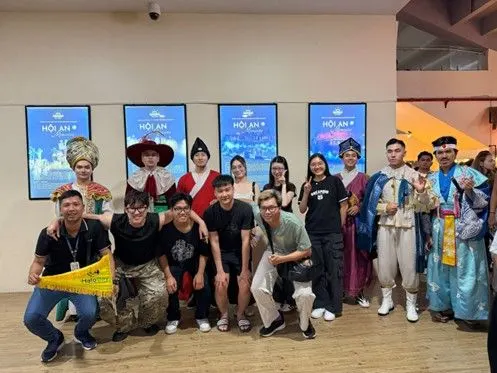
At BUV, learning goes beyond the classroom. Through field trips across Vietnam, students have opportunities to explore community-led tourism initiatives and observe how authenticity is shaped in real destinations. These experiences provide students on the Tourism Management programme with practical insights, preparing them for future careers in the global tourism industry.
EXPLORE PROGRAMMES
Undergraduate
Undergraduate
Undergraduate
Undergraduate
Undergraduate
Undergraduate
MORE TO EXPLORE


