

Undergraduate
BA (Hons) Business Entrepreneurship – Dual Degree
Awarded by: Manchester Metropolitan University

Alumni
Summary
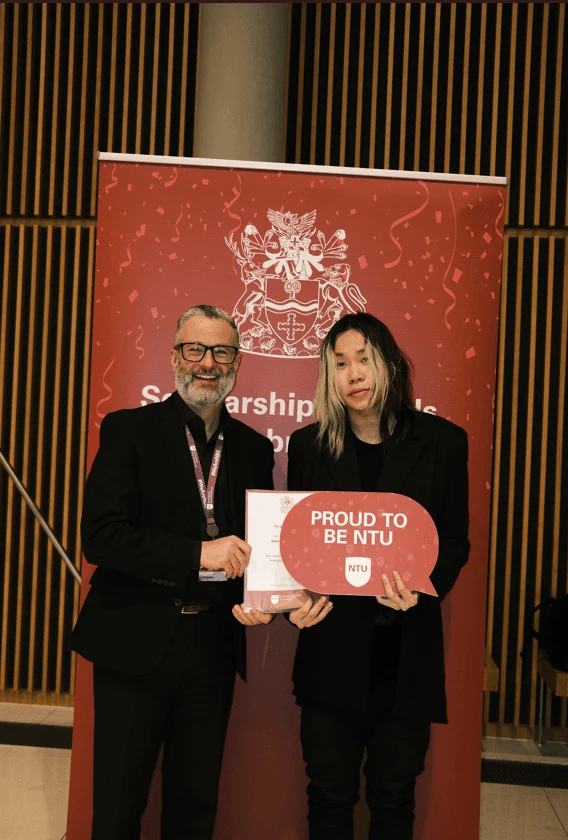
BUV Finance and Economics graduate Le Trong Nghia combined strategic thinking with his passion for fashion to build a distinctive creative portfolio. Supported by his academic foundation, industry experience and BUV’s International Office, he earned a 50% Master’s scholarship at Nottingham Trent University and began a new chapter in the UK fashion industry.

Stay up to date
Our website uses cookies to enhance your user experience and improve the effectiveness of our marketing activities. By clicking “Accept” or closing this window to continue browsing, you consent to our use of all cookies. If you do not agree to all cookies, please select “Manage cookies”. Learn more about our Privacy Policy and Cookie Policy for full details.
For many young creatives, fashion begins with instinct and emotion. For Le Trong Nghia, it began with strategy.
Before stepping into the studios of Nottingham Trent University with a 50% Master’s scholarship in hand, Nghia chose a path few aspiring designers would consider: studying Finance and Economics. What once seemed like a detour would later become the very thing that set him apart in one of the world’s most competitive creative industries.
This spring in the UK, Nghia spent his days under the spotlight, filming alongside some of the university’s most promising fashion graduates. Selected by the Fashion School at Nottingham Trent University, ranked 12th in the UK for Art and Design by The Guardian University Guide 2024, he was invited to appear in a showcase film celebrating outstanding graduate projects from the Class of 2026.
Standing before the camera, explaining every detail behind his work, Nghia found himself revisiting the journey that brought him there. His portfolio was no longer simply a collection of garments or visuals. It had evolved into a carefully constructed design language, where every silhouette, fabric, and concept carried intention, structure, and logic.
Yet behind that confidence was once a student uncertain whether fashion could ever become a realistic future.
Long before university, Nghia had immersed himself in archive fashion and avant garde design. But admiration alone did not convince him to pursue fashion immediately. He understood early on that the industry demanded far more than creativity. Behind every runway collection and brand identity were complex systems of finance, operations, and market strategy.
Rather than choosing an arts degree based purely on passion, Nghia made what he calls a “practical calculation” for his future: enrolling in the Finance and Economics programme at British University Vietnam.
Every industry eventually comes back to finance and economics. If you want to build something that lasts, the foundation has to be strong first.
At BUV, Nghia found more than academic training. The university became a space where he could quietly test the intersection between creativity and management.
Taking advantage of the school’s “three months study, three months break” structure, he gained nearly two years of hands on industry experience before graduation, working across multiple roles within Vietnam’s fashion scene.
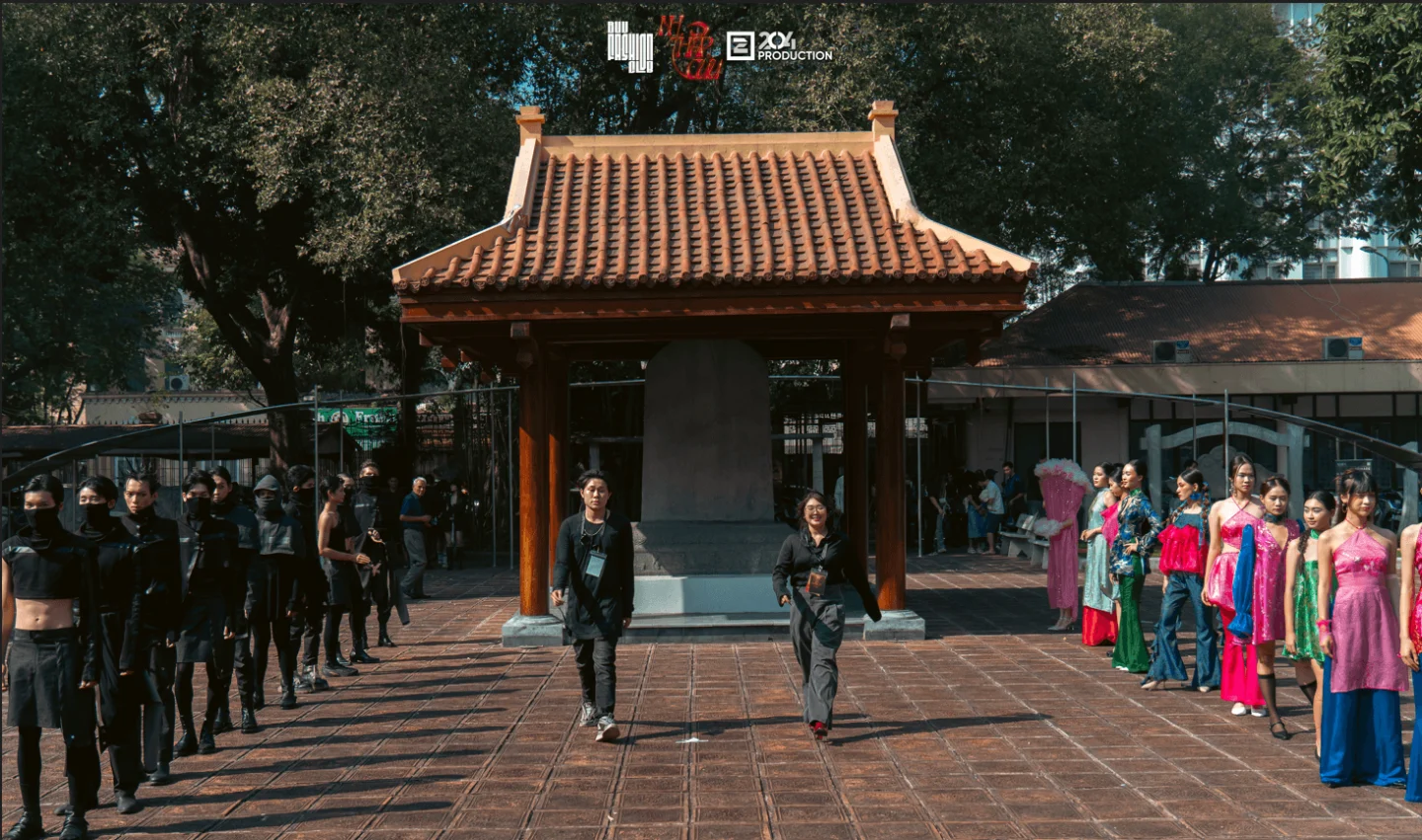
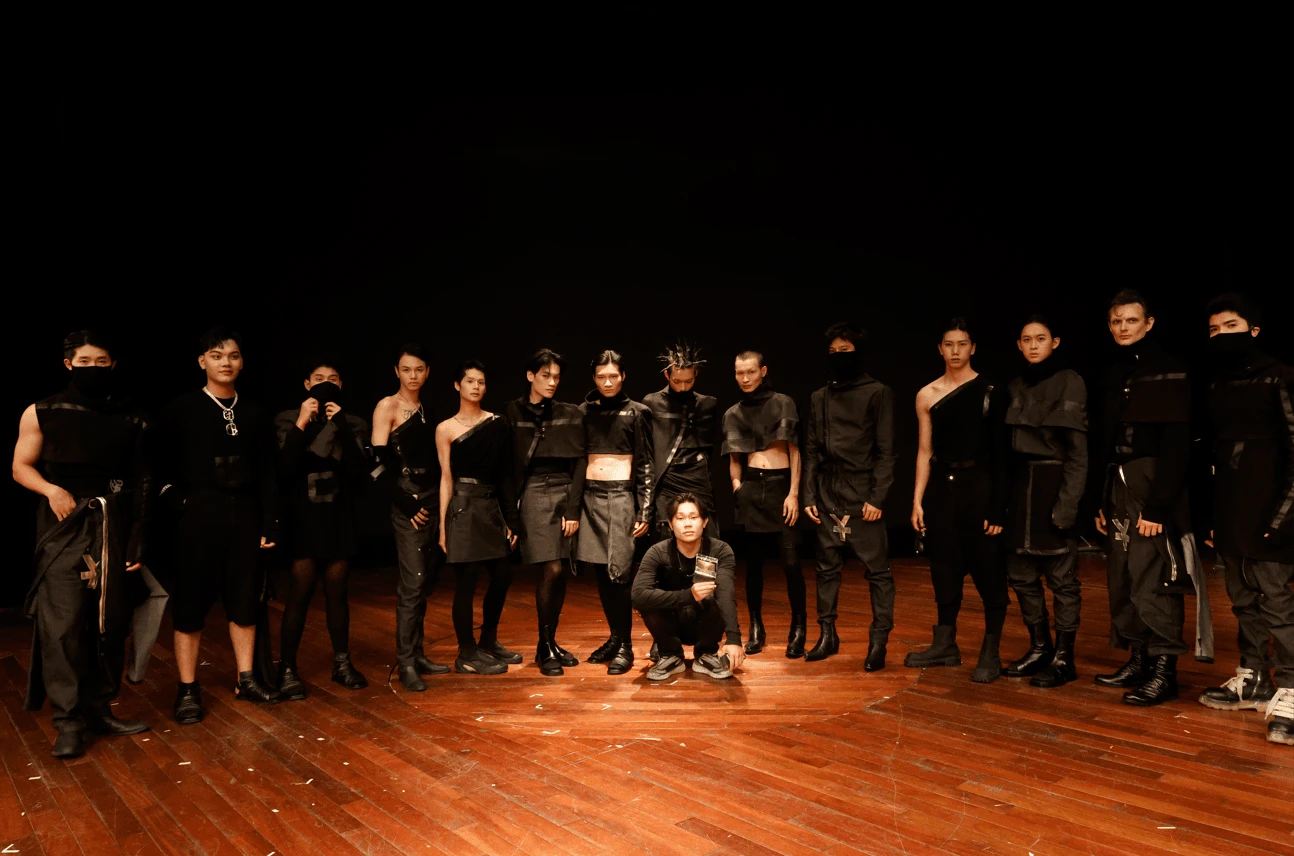
As Creative Director of the BUV Fashion Club, Nghia led large scale creative projects and multidisciplinary teams. One of the defining moments came during the Hanoi Creative Design Festival 2024, where he helped bring fashion and design concepts into a public cultural space. The experience sharpened his understanding not only of aesthetics, but of how creative ecosystems are built, managed, and sustained.
Another pivotal moment arrived in 2023, when BUV organized an International Experience trip to the UK. For Nghia, the journey became more than an exchange programme. It offered his first close encounter with British creative culture and global design thinking, planting the idea of pursuing postgraduate studies abroad.
Ironically, the most difficult chapter began after graduation.
Preparing a Master’s portfolio as a Finance student entering fashion was, in many ways, an uphill battle. Nghia had to transform scattered experiences, personal inspirations, and practical projects into a cohesive body of creative work compelling enough for top UK art schools.
There were countless nights of revising, deleting, rebuilding, and starting over.
Eventually, however, he discovered the thread connecting everything together: strategic thinking.
What initially seemed unrelated, his background in economics, project leadership, and creative operations, became the strongest differentiator in his application. His portfolio reflected not only artistic identity, but also an ability to think critically about systems, audiences, execution, and sustainability, qualities increasingly valued within global creative education.
When the scholarship offer from Nottingham Trent University finally arrived, Nghia described the moment as “hard to believe” for someone trained outside the arts.
The International Office at BUV helped connect me with the university and guided me through the partner’s expectations. That support allowed me to focus entirely on improving the creative quality of my portfolio.
Now studying in the UK, Nghia believes his Finance degree was never a backup plan, but an invisible advantage all along.
Conversations with international lecturers and industry professionals have reinforced that perspective. Whether in startups or luxury fashion houses, every creative business still depends on the same fundamentals: cash flow, operations, and sustainable growth. His creativity, therefore, is anchored by operational thinking.
For Nghia, moving from Finance to Fashion was never about abandoning one identity for another. It was about building a rarer combination: a designer who understands both imagination and strategy.
Passion alone is not enough. It needs a structure strong enough to survive reality. Sometimes the longer route gives you the stronger foundation for the dream you truly want.
EXPLORE PROGRAMMES
Undergraduate
Undergraduate
Undergraduate
Undergraduate
Undergraduate
Undergraduate

