


Data Economy Cooperation Identified as a Long-term Growth Driver for Vietnam
Dec 13, 2025
 18:00:53
Research collaboration in data economics and data valuation; cooperation in data governance and data security; and joint efforts in developing high-quality human resources have been identified as Vietnam’s three long-term cooperation priorities to transform data into a new engine of economic growth.

Overview of the Conference
Under the theme “New Ideas – New Policies – New Opportunities”, the International Conference on Data Economy, organised by the Ministry of Public Security on 13 December in Hung Yen, brought together more than 350 delegates. Participants included leading professors and data experts from the United Kingdom, Australia, the United States, the European Union, alongside representatives from ministries, diplomatic missions, international organisations, and major global technology corporations.
The conference focused on solutions for developing a comprehensive national data strategy, enabling Vietnam to integrate more deeply into regional and global data ecosystems.
In his opening remarks, Major General Nguyen Ngoc Cuong, Director of the National Data Centre and Vice Chairman of the National Data Association, noted that the world is witnessing the emergence of a new development paradigm. Traditional resources such as oil and heavy industry, which defined the 20th century, are increasingly giving way to knowledge and analytical capability.

Major General Nguyen Ngoc Cuong, Director of the National Data Centre and Vice Chairman of the National Data Association, delivering opening remarks at the conference.
He emphasised that data is no longer merely information, but has become a factor of production on par with land, labour and capital. Data is now a strategic resource that can be valued, traded and exploited to enhance productivity, underpin innovation and artificial intelligence, and make direct contributions to GDP in many economies. Consequently, nations that govern and leverage data more effectively will gain a decisive advantage in global competition.
“Against this backdrop, the Government has designated the Ministry of Public Security as the national focal point for data, responsible for building and operating core data platforms such as the National Population Database, the Electronic Identification and Authentication System, and the National Data Integration and Sharing Platform,” Major General Nguyen Ngoc Cuong stated.
He further highlighted that the development of the National Data Centre — currently the largest and most impactful data infrastructure project in Vietnam — will provide trusted data layers for digital government, foundational infrastructure for AI and digital services, and standardised nationwide data connectivity. This will lay the groundwork for the establishment of a data market and the development of Vietnam’s data economy.

Professor Raymond Gordon, President & Vice-Chancellor of British University Vietnam (BUV), delivering his remarks.
Speaking at the conference, Professor Raymond Gordon, President & Vice-Chancellor of British University Vietnam (BUV), emphasised that the data economy is not merely a technological issue. Rather, it represents a new national development architecture, closely linked to how a country designs its infrastructure, governance frameworks, talent pipelines and trust mechanisms.
Professor Gordon described this as the “new thinking” in governance design, where competitive advantage does not arise from individual technologies alone, but from the ability to design systems in which innovation is accelerated while trust is simultaneously safeguarded.
According to Associate Professor Ali Al-Dulaimi, British University Vietnam, effective data governance combined with artificial intelligence could contribute an additional USD 79 billion to Vietnam’s GDP by 2030. AI, he noted, has the potential not only to optimise manufacturing and agriculture, but also to deliver more personalised public services and improve citizens’ quality of life.

The conference was also attended by Ms Nguyen Thi Thanh, Vice Chairwoman of the National Assembly of Vietnam.
However, the economic value of data often remains intangible and difficult to measure. Associate Professor James Abdey, London School of Economics and Political Science (LSE), highlighted that a key challenge in developing the data economy lies in measurement. Without incorporating the value of data assets into the national accounting system (GDP), Vietnam would be unable to design accurate and effective policies.
To transform data into a driver of growth, an economic asset and a strategic national infrastructure, Major General Nguyen Ngoc Cuong reaffirmed that Vietnam has identified three long-term cooperation priorities: Research collaboration in data economics and data valuation; Cooperation in data governance and data security; and Joint efforts in developing high-quality human resources.
“We believe that today’s conference marks a meaningful step forward, opening pathways for joint research programmes, regional and international cooperation models, and long-term partnerships between Vietnam and the global academic community in the field of data economy,” he stated.
Within the framework of the conference, the National Data Association signed Memoranda of Understanding (MoUs) with the University of London, the London School of Economics and Political Science (LSE), City, University of London (City St George’s), and British University Vietnam (BUV).

The signing ceremony of the Memoranda of Understanding (MoUs) between the National Data Association and partner universities.
The signing of these MoUs is significant in several respects:
(i) Affirming Vietnam’s position in the global data economy: The agreements demonstrate that Vietnam is not a passive participant, but an active contributor in shaping the thinking, standards and rules of the global data economy from an early stage;
(ii) Expanding international academic and policy collaboration: Partnerships with leading UK universities enable Vietnam to access advanced expertise in data, digital economy, cybersecurity and data governance — all critical to future growth;
(iii) Laying the foundation for a legal framework for the data economy: Sustainable development of the data economy requires forward-looking legislation. These agreements provide a platform for research, policy advisory work and the development of regulatory frameworks aligned with international standards while remaining relevant to Vietnam’s context;
(iv) Connecting government, academia and education: The collaboration links national data governance authorities with leading research and education institutions, fostering an ecosystem for talent and knowledge development in the data economy; and
(v) Preparing for the long term: Data is the “new resource” of the future. These agreements represent a strategic step to enable Vietnam to harness, protect and create value from data for decades to come.
Source: VnEconomy
- Share


Mar 18, 2026
What Defines the New Generation of Leaders?
 Read more
Jan 09, 2026
ICCIT 2025: Innovative AI Solutions for a Secure and Connected FutureOn 12 – 13 December 2025, British University Vietnam (BUV) hosted the 3rd International Conference on Innovation and Challenges in Computing and Innovative Technologies for a Sustainable Future (ICCIT 2025), providing an international forum for scholarly exchange on emerging challenges and innovations in computing, artificial intelligence, and digital security. The conference was organised by the […]

Nov 04, 2025
Technology and Education: Driving Forces for Sustainable and Inclusive DevelopmentAt the International Conference on Economics, Business, Entrepreneurship, Management, and Accounting in Indonesia, a representative from the British University Vietnam highlighted how technology, artificial intelligence, and education can work together to foster sustainability and social inclusion. Held from 24 to 25 October 2025 at Dr. Soetomo University (Unitomo) in Surabaya, Indonesia, the 2nd International Conference […]

Nov 01, 2025
BUV Faculty Member Delivers Technical Workshop at AICTE-Sponsored EventAssoc. Prof. Anchit Bijalwan recently delivered a specialised technical workshop titled “Integrating Digital Forensics and Crowd Surveillance for Healthcare Data in Epidemic Prediction” as part of a 5-day programme sponsored by the All India Council for Technical Education (AICTE), taking place from 20–25 October. The workshop forms a key component of the event’s broader theme, […]

Oct 21, 2025
Contributing to Sustainable Tourism and Heritage Preservation in VietnamBritish University Vietnam recently participated in the 7th International Conference on Tourism Development in Vietnam, held in Hue, under the theme “Tourism – Heritage – City – Creativity”. Representing BUV were faculty members and students who presented research with significant societal impact, particularly in the fields of sustainable tourism development and cultural heritage preservation. Dr. […]

Oct 21, 2025
BUV co-organises Insight360 Conference and presents research on sustainability and innovationBritish University Vietnam joined leading institutions from across the region at the Insight360 Conference in Malaysia, presenting new research on sustainability, innovation and responsible business practices. British University Vietnam (BUV) has strengthened its academic engagement in sustainability and innovation by co-organising and contributing to the INSIGHT360: International Conflux on Business, Law and Sustainable Futures held […]

Jul 22, 2025
BUV and NAEM Launch Collaborative Project to Bridge the Generative AI Divide in Higher Education InstitutionsBUV and the National Academy of Education Management’s newly launched research project – marked by a recent MOU signing – aims to bridge knowledge gaps, support ethical AI adoption, and build long-term capacity for educators and institutions across the country. In recent years, the rapid advancement of Artificial Intelligence – particularly Generative AI – has […]

Jun 19, 2025
Using AI to Predict Hospital Stays: BUV Lecturer’s Research Could Help Patients Recover Sooner and Ease Pressure on HospitalsDr. Dang Quang Vinh from the School of Computing & Innovative Technologies, together with his colleagues, have recently developed an AI-powered model that accurately predicts the length of hospital stay for patients undergoing surgery for adult spinal deformity. Their research paper “Predictive Modeling Of Length Of Stay in General Surgery Patients Using Artificial Intelligence”, was […]
May 05, 2025
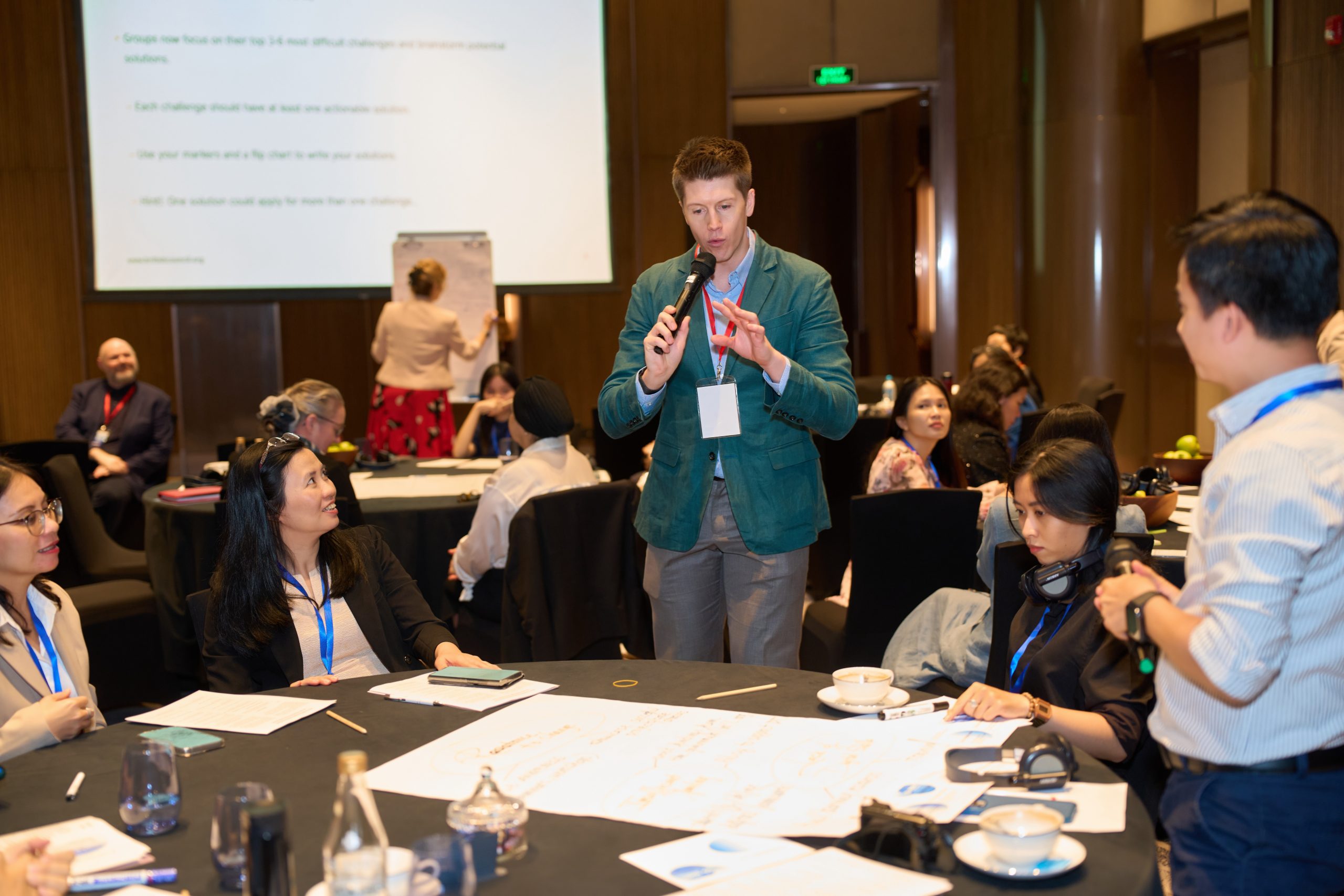
BUV Leads Educational Collaboration to Successful Digital Transformation in Vietnamese UniversitiesWith key events recently held in Ho Chi Minh City, the SOARing Digital Transformation in Vietnamese Universities initiative, led by BUV in partnership with Bournemouth University and other Vietnamese institutions, has made significant progress in providing valuable insights into the tools and strategies driving digital transformation in universities. The “SOARing Digital Transformation in Vietnamese Universities” […]
Apr 25, 2025
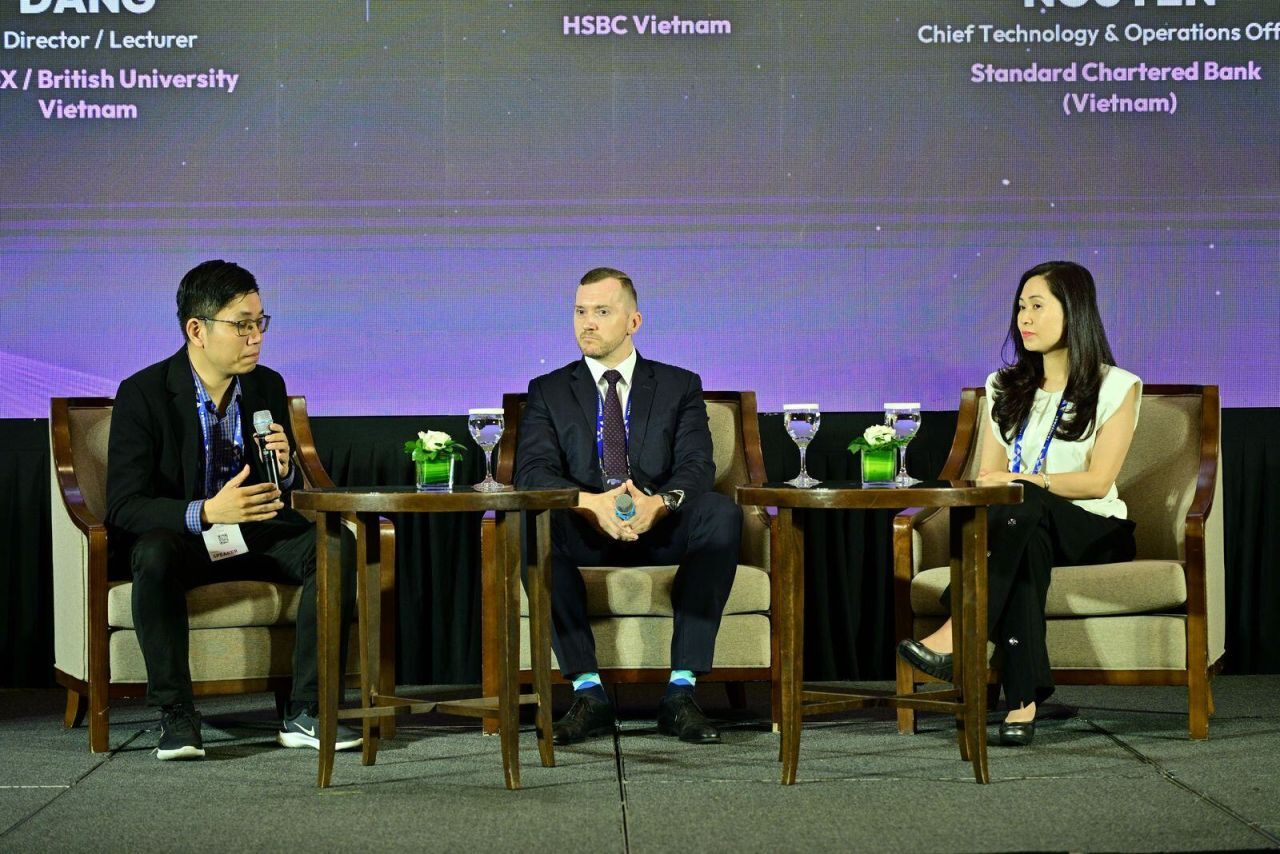
BUV’s lecturer shares expert insights into data strategy and the future of smart banking at the World Financial Innovation Series 2025Joining the leading fintech experts in Vietnam, Dr. Dang Quang Vinh – lecturer from the School of Computing & Innovative Technologies at BUV – delivered key insights into data culture that transforms the future of banking, as well as provoking thoughtful discussions on the implication of biometrics evolution to user experience. On April 15–16, 2025, […]

Mar 18, 2025
BUV becomes the first and only university in Vietnam to join the UN University Global AI NetworkBritish University Vietnam (BUV) is proud to announce its membership in the UNU Global AI Network, becoming the first and only higher education institution in Vietnam to join a prestigious global platform led by the United Nations University (UNU) and its partners. This milestone underscores BUV’s commitment to leveraging artificial intelligence (AI) for sustainable development, […]