



 Job Description
BRITISH UNIVERSITY VIETNAM
British University Vietnam (BUV) is the first and only international university in Vietnam authorised to award degrees from renowned UK universities: University of London, University of Staffordshire, University of Stirling, Arts University Bournemouth, Bournemouth University, and Manchester Metropolitan University. Established in 2009, BUV delivers a wide range of undergraduate and postgraduate programmes following UK academic standards.
BUV is rated 5 Stars by QS and institutionally accredited by the UK Quality Assurance Agency (QAA). With over 500 enterprise partners, 100% of BUV graduates are employed or pursue further study within three months of graduation.
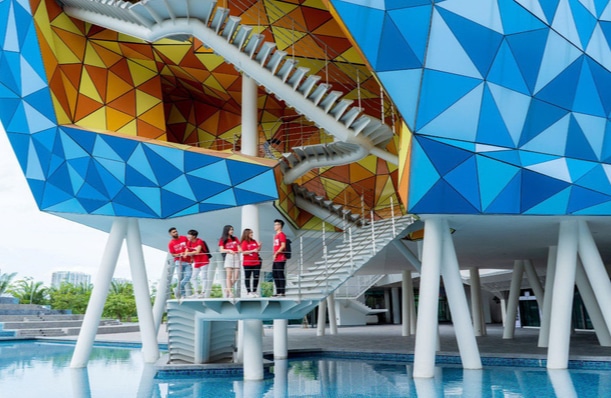
Students study at a world class campus in Ecopark, developed with an investment of up to USD 165 million, offering modern facilities and an international-standard learning environment for more than 10,000 students upon completion.
POSITION PURPOSE
The Part-time Teaching Practitioner is an industry-experienced teaching role designed to bring current professional practice into modules across communications, design, illustration, animation, film, and media production. Practitioners contribute to tutorial, seminar, studio, workshop, critique, and production-based learning under the academic direction of the Module Leader.
The role is suitable for candidates with a relevant MA or equivalent postgraduate qualification, strong professional experience, and the ability to connect classroom learning with contemporary industry standards. Preference will be given to candidates who can contribute across more than one programme area and who can support interdisciplinary learning between communication, design, and media production practice.
AREAS OF RESPONSIBILITY
Teaching, Workshop, and Studio Delivery
- Deliver assigned tutorials, seminars, workshops, studio sessions, production labs, critiques, and practice demonstrations within the framework set by the Module Leader.
- Prepare practical sessions in advance by engaging with module briefs, learning outcomes, readings, cases, production tasks, and assessment expectations.
- Use professional examples, current industry workflows, creative practice methods, and real-world cases to help students understand how disciplinary knowledge is applied in practice.
- Facilitate active learning through discussion, practical exercises, peer critique, problem-solving, client-style briefs, production activities, and reflective practice.
- Adapt session pace and learning support to student needs while remaining aligned with the module plan, assessment brief, and academic standards.
Assessment, Feedback, and Academic Standards
- Contribute to marking of formative and summative work where assigned, using rubrics and criteria approved by the Module Leader; summative marks remain subject to moderation.
- Provide clear, constructive, developmental feedback that helps students improve their professional, creative, technical, analytical, and reflective work.
- Participate in marking calibration, moderation discussions, assessment briefings, and end-of-module review activities when required.
- Support academic integrity by identifying and documenting concerns in line with University procedures, including concerns about plagiarism, unauthorised assistance, or inappropriate use of digital tools.
Practice-led Learning Materials and Resources
- Contribute practical exercises, case materials, demonstrations, professional exemplars, production references, and workshop resources that support the Module Leader’s design.
- Develop or refresh applied learning activities such as campaign tasks, studio briefs, portfolio exercises, storyboards, media production exercises, presentation activities, and critique formats.
- Maintain relevant Learning Management System materials as delegated, including workshop instructions, supporting resources, submission guidance, and links to professional references.
- Share current industry insight, tools, production standards, and professional expectations that help students build employability and practice readiness.
Student Support and Professional Practice Mentoring
- Provide subject-related guidance during assigned sessions, consultation slots, studio support, or production supervision activities.
- Support students in developing professional communication, design thinking, creative decision-making, technical competence, portfolio/showreel quality, and reflective practice.
- Encourage inclusive, respectful, and constructive learning environments, especially during critique, peer review, group work, and production activity.
- Escalate student engagement, wellbeing, safeguarding, or academic concerns promptly to the Module Leader, Programme Lead, or appropriate University support team.
Collaboration and Cross-programme Contribution
- Work collegially with Module Leaders, Tutors and Programme Leads to ensure consistent delivery and student experience.
- Where expertise allows, contribute across Professional Communications, Graphic Design and Illustration with Animation, and Film and Media Production modules.
- Support interdisciplinary activities, shared briefs, industry-facing events, student showcases, portfolio reviews, recruitment activities, open days, and employability initiatives as requested.
- Engage in relevant briefings, training, peer observation, and continuing professional development to maintain quality and alignment with University expectations.
Scope and Boundaries of the Role
The following boundaries define the scope of the Part-time Teaching Practitioner role and distinguish it from Module Leader and full-time academic positions:
- Practitioners deliver assigned teaching and practice-based learning activities within a module framework approved by the Module Leader.
- Practitioners do not normally design modules, set learning outcomes, issue assessment briefs, or act as Module Leader unless separately appointed or formally delegated in writing.
- Practitioners may contribute professional insight, case material, studio exercises, and assessment feedback, but summative assessment decisions remain subject to moderation and final approval through normal University processes.
- Practitioners do not primary-supervise dissertations or capstone projects unless this responsibility is formally assigned and supported by the Programme Lead or Head of School.
- Practitioners must comply with University policies on safeguarding, equality and inclusion, data protection, academic integrity, health and safety, and professional conduct.
QUALIFICATION REQUIREMENTS
Essential Qualifications and Experience
- A Master’s degree in a relevant discipline is normally required. Relevant areas may include Professional Communications, Media and Communication, Public Relations, Marketing Communications, Journalism, Graphic Design, Visual Communication, Illustration, Animation, Motion Graphics, Film, Media Production, Digital Media, or a closely related field. Candidates with Bachelor’s degree with strong work experience background are also highly encouraged to apply.
- Strong and current professional experience in a relevant industry area, evidenced through employment history, consultancy, creative practice, production credits, campaigns, exhibitions, publications, client work, portfolio, showreel, or other professional outputs.
- Demonstrated ability to teach, mentor, coach, or train learners in professional, creative, technical, studio, production, or communication settings.
- Ability to connect theory, professional standards, industry workflows, and applied practice in ways that are clear and useful for undergraduate students.
- Strong English-language communication, preparation, reliability, professional judgement, and ability to work within institutional academic and operational requirements.
Preferred Qualifications and Experience
- Preference will be given to candidates who can teach or support more than one programme area, especially across professional communications, design, illustration, animation, film, and media production.
- Preference will be given to candidates with demonstrated design and media production skills, including the ability to support students in visual communication, creative development, production planning, and digital media outputs.
- Prior teaching experience in higher education, professional training, studio mentoring, workshop facilitation, or industry-based learning is desirable.
- FHEA, PGCHE, teaching certification, assessor training, or comparable professional development in teaching and learning is desirable but not essential.
- Current industry networks, client-facing experience, or interdisciplinary project experience that can enrich student learning and employability are desirable.
Programme-relevant Knowledge and Skills
Professional Communications
- Strategic communication, design and media production skills, PR and campaign planning, media relations, digital and social media communication, content strategy, audience research, and intercultural communication.
Graphic Design and Illustration with Animation
- Design principles, typography, branding, layout, visual identity, illustration, image-making, storyboarding, 2D animation, motion design, portfolio development, and tools such as Adobe Photoshop, Illustrator, InDesign, After Effects, Figma, Procreate, Blender, Toon Boom, or comparable software.
Film and Media Production
- Visual storytelling, directing, producing, camera operation, lighting, location sound, editing, colour correction, sound design, production management, media ethics, consent and release practices, and tools such as Adobe Premiere Pro, DaVinci Resolve, Avid Media Composer, Audition, Pro Tools, or comparable production systems.
APPLICATION EVIDENCE
Applicants should normally provide evidence of both academic qualification and professional practice. This may include:
- CV outlining academic qualifications, teaching or mentoring experience, and relevant professional work experience.
- Portfolio, showreel, campaign samples, writing samples, production credits, design work, client work, or other professional outputs relevant to the proposed teaching area.
- Short statement indicating programme areas the candidate can support and whether they can work across multiple programmes.
BENEFITS
- Competitive hourly rates
- Opportunity to work within a professional and multi-cultural environment
- Opportunity to work in a world-class and state-of-the-art campus
- Flexibility with regards to hours
- Onsite fitness and sport centre
Application Interested candidates should prepare an up-to-date CV and application letter indicating for which position you are applying. Please then select SUBMIT YOUR CV button on our JOBS AT BUV webpage or email to hr@buv.edu.vn. We will invite short-listed candidates for interviews. Recruitment will remain open until the position is filled.
Important Notice:
To strengthen communication and protect candidates from increasingly complex fraud risks, please note that BUV will never request any fees or payments during the recruitment process. Be cautious of scams that ask for money to apply.
The Human Resources Department (HRD) of BUV only uses the official email address hr@buv.edu.vn. If you are ever unsure about the authenticity of any information or request, kindly contact HRD at hr@buv.edu.vn or by phone at +84 2216 250 250 during office hours for verification and support.
Submit Your CV
Contact details
- Contact Name: Human Resources Department
- Method of contact: Email or post
- Address: Ecopark township, Van Giang, Hung Yen
- Email: hr@buv.edu.vn