


ICCIT 2025: Innovative AI Solutions for a Secure and Connected Future
Jan 09, 2026
 11:42:30
On 12 – 13 December 2025, British University Vietnam (BUV) hosted the 3rd International Conference on Innovation and Challenges in Computing and Innovative Technologies for a Sustainable Future (ICCIT 2025), providing an international forum for scholarly exchange on emerging challenges and innovations in computing, artificial intelligence, and digital security.

The ICCIT 2025 saw the participation of scholars around the world
The conference was organised by the School of Computing & Innovative Technologies in collaboration with the Computing, Games and Data Science (CGDS) Academic Research Cluster under the Centre for Research and Innovation (CRI), and was chaired by Assoc. Prof. Anchit Bijalwan, Lead of the CGDS Academic Research Cluster.
Scaling in Quantity and Quality of Scholarly Contributions
ICCIT 2025 demonstrated clear growth in both scale and academic depth, welcoming 82 presenters from around the world. This expansion reflects the conference’s increasing international recognition and its role as a platform for comparative scholarly exchange across diverse technological, regulatory, and market contexts.

Dr. Mark Wheaton, Dean (Higher Education) at BUV, delivering his welcome speech at the conference
Under the theme “Innovating AI-Driven Security: Shaping a Connected Future,” ICCIT 2025 focused on practical, deployable innovations that respond to the growing demands of digital transformation. The conference addressed how AI can be effectively integrated into systems that people and organisations rely on every day, across six applied research tracks:
- AI-driven approaches to cyber defence and threat detection, focusing on adaptive, data-driven security mechanisms
- Privacy-centric AI solutions, incorporating regulatory compliance and ethical considerations into system design
- Smart IoT applications, addressing interoperability and secure connectivity in intelligent environments
- Resilience in cyber-physical systems, with an emphasis on reliability, fault tolerance, and system recovery
- Emerging AI applications, supported by empirical evaluation and measurable performance outcomes
- AI innovation in gaming and interactive technologies, highlighting both technical advancement and user-centred design
Collectively, these contributions reflected a discernible shift towards higher research rigour and practical relevance, positioning ICCIT 2025 not only as a venue for sharing ideas, but as a forum for advancing scalable, secure, and socially responsible AI-driven systems. This progression builds upon the foundations established in ICCIT 2023 and 2024, while signalling the conference’s ongoing evolution in academic standing and impact.

Assoc. Prof. Anchit Bijalwan, Lead of the CGDS Academic Research Cluster, chairing the conference for the 3rd year in a row
Global Dialogue Shaping the Future of Secure AI
The conference featured two distinguished keynote speakers whose presentations offered deep insights into both technological innovation and responsible AI deployment.
Dr. Son Tien Bui, a leading expert in robotics, delivered a compelling keynote titled “Soft Robotics in Action.” His presentation explored advances in soft robotics, demonstrating how compliant materials and bio-inspired designs enable safer, more adaptive, and human-compatible robotic systems. Dr. Bui discussed applications ranging from soft grippers to aerial robotic platforms with deformable components, while also highlighting ongoing challenges in modelling, control, sensing integration, and system scalability.

Dr. Son Tien Bui delivering his keynote speech on “Soft Robotics in Action”
The second keynote was delivered by Mr. Duc Duong, Manager-Architect at IBM, who focused on AI Governance Frameworks. His talk emphasised the critical importance of ensuring AI systems are ethical, trustworthy, and compliant with regulatory standards. Addressing themes such as Trust in AI, Accountability, Responsible AI, and AI Ethics, Mr. Duong’s insights added significant value to discussions on the responsible adoption of AI technologies.

Mr. Duc Duong delivering his keynote speech on AI Governance Frameworks
As the day progressed, international participants showcased their groundbreaking research, sparking dynamic discussions and insightful exchanges that enriched the experience for all attendees. The diversity of contributors reflected BUV’s commitment to fostering research engagement across disciplines and academic levels.
Scholarly discussions were facilitated by an international panel of session chairs from universities and institutions in Vietnam, the United Kingdom, Malaysia, India, South Korea, and other countries, ensuring academic rigour and constructive peer exchange in both physical and virtual sessions.


Scholars dived into a variety of relevant topics within the themes of the conference
“The theme of this year’s ICCIT is not merely a reflection of current trends, but a strategic imperative. In an era defined by rapid digital transformation and artificial intelligence, AI has become a fundamental enabler of next-generation cybersecurity, supporting intelligent and proactive responses to increasingly complex and evolving threats,” shared Assoc. Prof. Ali Al-Dulaimi, Head of the School of Computing & Innovative Technologies at BUV, “This conference provides a critical platform for researchers and practitioners to examine these trends, share evidence-based solutions, and collectively shape research directions that will strengthen secure, resilient, and trustworthy digital systems.”
Over three consecutive years, ICCIT has shown consistent growth in academic quality, international participation, and practical relevance. From ICCIT 2023 to ICCIT 2025, the conference has evolved into a credible forum for diverse, high-quality research with a strong focus on scalable and responsible applications. As ICCIT continues to mature, it reinforces BUV’s role in advancing impactful research, fostering global collaboration, and shaping the future of secure and sustainable digital technologies.
- Share


 Read more
Jun 24, 2026
National Survey on Generative AI in Vietnamese Higher EducationThe Centre for Research and Innovation (CRI) at British University Vietnam (BUV), in collaboration with Swansea University (UK), is inviting lecturers, students, and higher education administrators across Vietnam to participate in a national survey on the use of Generative Artificial Intelligence (GenAI) in higher education. The survey is part of the international research project Bridging […]

Dec 13, 2025
Data Economy Cooperation Identified as a Long-term Growth Driver for VietnamResearch collaboration in data economics and data valuation; cooperation in data governance and data security; and joint efforts in developing high-quality human resources have been identified as Vietnam’s three long-term cooperation priorities to transform data into a new engine of economic growth. Under the theme “New Ideas – New Policies – New Opportunities”, the International […]

Nov 04, 2025
Technology and Education: Driving Forces for Sustainable and Inclusive DevelopmentAt the International Conference on Economics, Business, Entrepreneurship, Management, and Accounting in Indonesia, a representative from the British University Vietnam highlighted how technology, artificial intelligence, and education can work together to foster sustainability and social inclusion. Held from 24 to 25 October 2025 at Dr. Soetomo University (Unitomo) in Surabaya, Indonesia, the 2nd International Conference […]

Nov 01, 2025
BUV Faculty Member Delivers Technical Workshop at AICTE-Sponsored EventAssoc. Prof. Anchit Bijalwan recently delivered a specialised technical workshop titled “Integrating Digital Forensics and Crowd Surveillance for Healthcare Data in Epidemic Prediction” as part of a 5-day programme sponsored by the All India Council for Technical Education (AICTE), taking place from 20–25 October. The workshop forms a key component of the event’s broader theme, […]

Oct 21, 2025
Contributing to Sustainable Tourism and Heritage Preservation in VietnamBritish University Vietnam recently participated in the 7th International Conference on Tourism Development in Vietnam, held in Hue, under the theme “Tourism – Heritage – City – Creativity”. Representing BUV were faculty members and students who presented research with significant societal impact, particularly in the fields of sustainable tourism development and cultural heritage preservation. Dr. […]

Oct 21, 2025
BUV co-organises Insight360 Conference and presents research on sustainability and innovationBritish University Vietnam joined leading institutions from across the region at the Insight360 Conference in Malaysia, presenting new research on sustainability, innovation and responsible business practices. British University Vietnam (BUV) has strengthened its academic engagement in sustainability and innovation by co-organising and contributing to the INSIGHT360: International Conflux on Business, Law and Sustainable Futures held […]

Jul 22, 2025
BUV and NAEM Launch Collaborative Project to Bridge the Generative AI Divide in Higher Education InstitutionsBUV and the National Academy of Education Management’s newly launched research project – marked by a recent MOU signing – aims to bridge knowledge gaps, support ethical AI adoption, and build long-term capacity for educators and institutions across the country. In recent years, the rapid advancement of Artificial Intelligence – particularly Generative AI – has […]

Jun 19, 2025
Using AI to Predict Hospital Stays: BUV Lecturer’s Research Could Help Patients Recover Sooner and Ease Pressure on HospitalsDr. Dang Quang Vinh from the School of Computing & Innovative Technologies, together with his colleagues, have recently developed an AI-powered model that accurately predicts the length of hospital stay for patients undergoing surgery for adult spinal deformity. Their research paper “Predictive Modeling Of Length Of Stay in General Surgery Patients Using Artificial Intelligence”, was […]
May 05, 2025
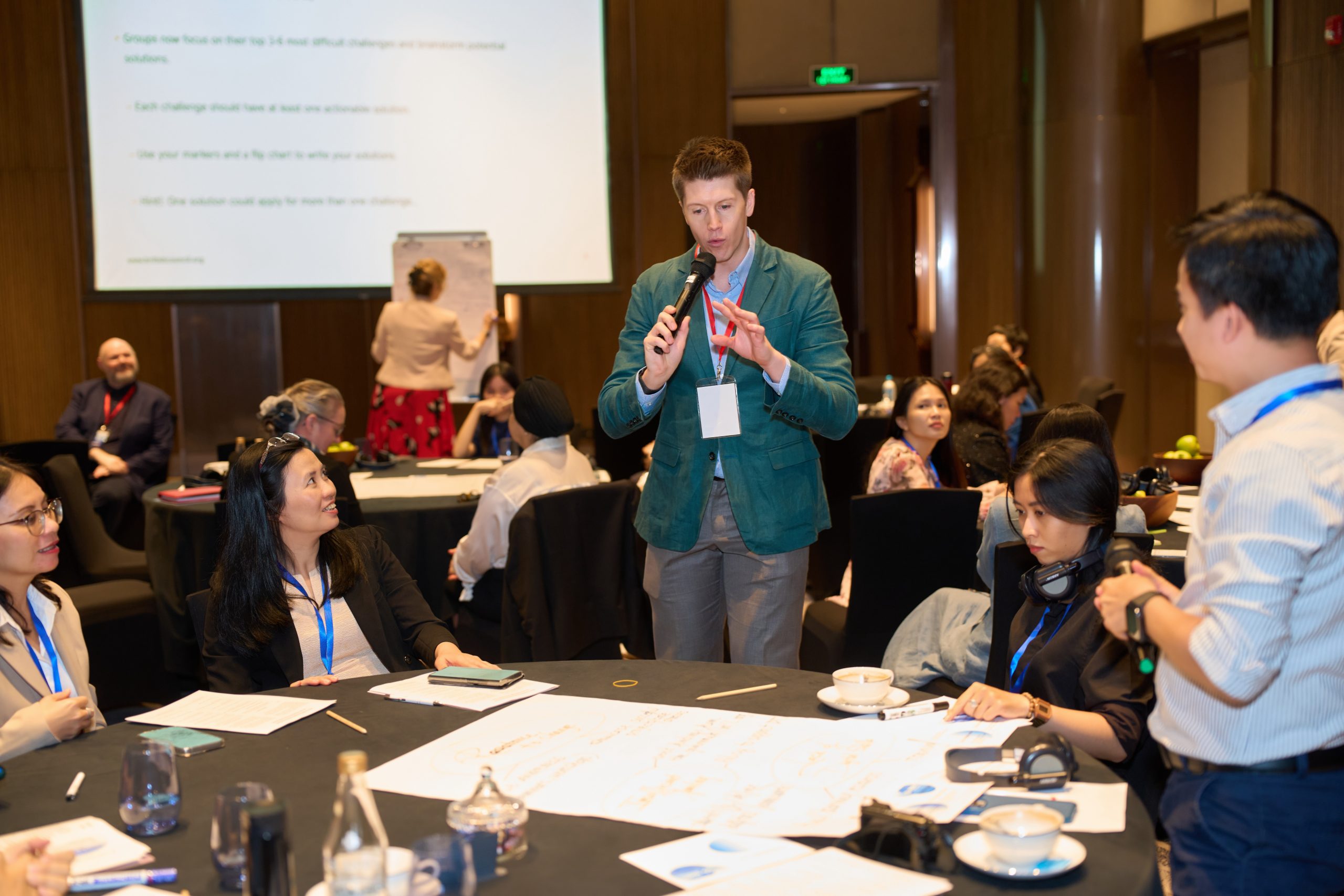
BUV Leads Educational Collaboration to Successful Digital Transformation in Vietnamese UniversitiesWith key events recently held in Ho Chi Minh City, the SOARing Digital Transformation in Vietnamese Universities initiative, led by BUV in partnership with Bournemouth University and other Vietnamese institutions, has made significant progress in providing valuable insights into the tools and strategies driving digital transformation in universities. The “SOARing Digital Transformation in Vietnamese Universities” […]
Apr 25, 2025
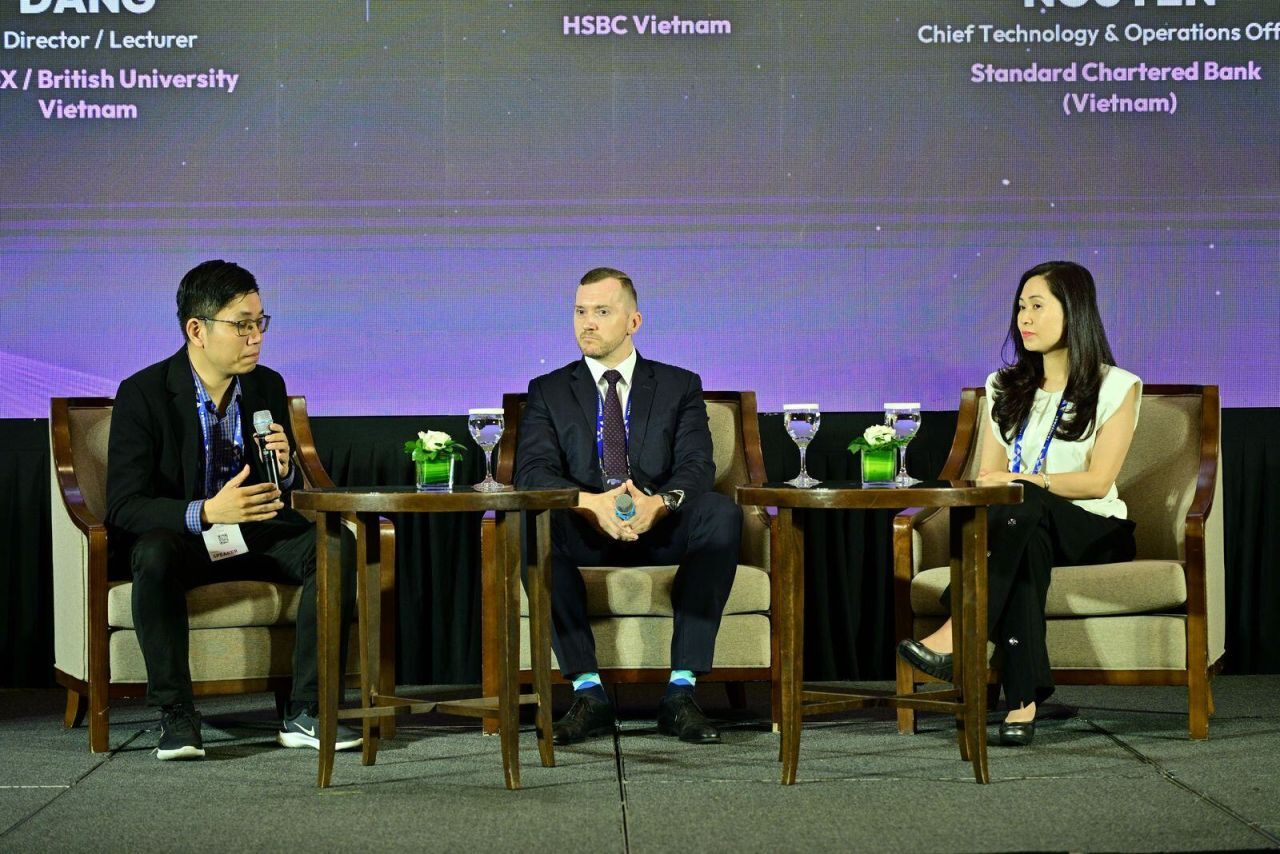
BUV’s lecturer shares expert insights into data strategy and the future of smart banking at the World Financial Innovation Series 2025Joining the leading fintech experts in Vietnam, Dr. Dang Quang Vinh – lecturer from the School of Computing & Innovative Technologies at BUV – delivered key insights into data culture that transforms the future of banking, as well as provoking thoughtful discussions on the implication of biometrics evolution to user experience. On April 15–16, 2025, […]